Now that you’ve bought a micro four thirds camera, you’re probably looking to get the best micro four thirds lenses for travel photography.
When traveling, I really prefer to pack light so I’ll be focusing on what to carry if you want a minimal setup. Not everybody wants to go light, but I’m traveling long-term these day, so less is more, all day everyday.
I’m also a hobbyist, not a pro, so I aim for budget to mid-range choices. If your budget is higher, I mention some upgrade picks but personally, I try to steer away from the higher priced specialty lenses. Like I said, less is more and versatile is better than specialty.
READ MORE: Don’t have a micro four thirds? Check out the best Fuji mirrorless lenses for travel.
What matters for Travel Photography
First let’s go over what to consider when picking a lens for travel photography. It’s not like any lens is ‘designed’ for travel photography, (and if they are I’d like to hear about it) but there are some factors that do make a lens better suited.
So I’m going to go over what makes a lens great for travel photography.
Weight
If you’re not traveling light, then there’s no difference between lenses for travel photography and your general kit. Just take every lens you’d like from ultra-wide to telephoto.
If you want a small, light kit, think carefully about what each lens adds to your arsenal, how much each lens weighs and how many you are willing to carry.
One thing to bear in mind, is that you can carry more lenses in your suitcase, and then only pick a couple of lenses for one outing.
I will carry 3 lenses or so on a trip, but I often stick to just one lens on camera for a particular day or location. So think about both those aspects when you pick your lenses.
Size
I often get guys asking me if a camera is pocketable. Now, as a lady, there’s literally no camera that’s ‘pocketable’ in my jeans, like not even a point and shoot sadly.
Maybe some athleisure joggers could hide a p&s, maybe. But that’s about it.
Anyway back to size, size matters – anything that makes it more or less likely that you carry your camera, matters. My small GX-85 gets quite big when I throw on a large lens like this.
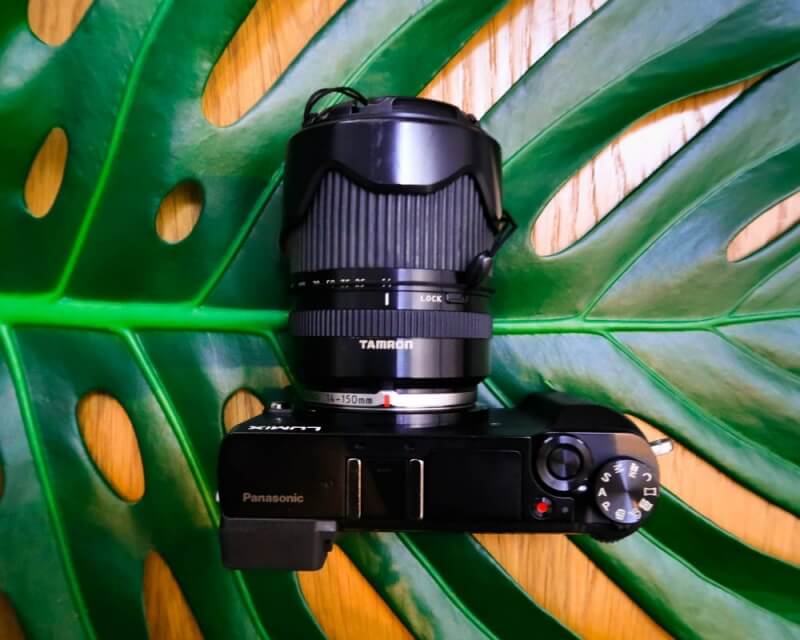
But as a woman, I carry a purse, and it actually does fit in my purse. Plus it’s safely padded, as long as I use my favorite trick – the camera bag insert.
READ MORE: Why a DIY camera bag is the best Travel Camera bag.
For guys, the choice of lens can make an otherwise small camera completely unpocketable, but a pancake lens can easily be pocketable.
Focal Length
Focal length comes into play because travel involves a lot of different scenes. Sometime you want landscape shots of stunning limestone cliffs rising above the land, and portrait shots of local culture. Sometimes you want telephoto shots of wildlife and birds.

You should pick your lenses to match your style of photography and your budget, not what some magazine says you should get next.
If you know you are more inclined to landscapes, make sure you have the wide end of the focal range well covered. Maybe invest in an ultra wide angle lens as well. However, if you are a big birdwatcher, perhaps a good telephoto will suit you better. The best m43 travel lenses really depend on you, the photographer.
Remember that the m43 format basically doubles your range so a 45-150mm is the equivalent of 90-300mm on a full frame camera. On the zoom side this is nice as you get a lot of reach. On the wide end, it means it’s quite hard to get less than 24mm on the wide end.
Aperture
Fast lenses are always better since you can get shots with less light and narrower DOF for that nice bokeh. But they come with a price as they often require a physically larger lens. Good zoom lenses that have a wide max aperture are typically a good deal pricier than their slower counterparts.

I like to carry a separate prime lens for when I want some low light, narrow depth of field shots. This is especially if I go out to check out nightlife or live music. While not the traditional idea of travel photography, it’s a part of travel for many.
Weatherproofing
Weatherproofed lenses can give a sense of security when shooting in wetter conditions. but check whether your camera is weather-proof too. I don’t find weather-proofing to be that crucial, mostly because I’ve shot for many years without weatherproofing and not had a problem, even at Burning Man and in rainy weather.
Obviously once you start getting drops on the lens, it’s not easy to continue shooting anyway. So it rarely gets to the point where rain gets into the camera. I worry more about dust, which means I take care when changing lenses. So in a way weatherproofing is something that comes up with travel lenses but you should think about how important it is to you.
Best Micro Four Thirds Lenses for Travel Photography
Next, I’ll go over the best lenses you might want in your kit, and then you probably should pick a one or two lens solution for your style of photography. Here’s the list of the best micro four thirds lenses for travel photography :
1. OM SYSTEM M.Zuiko ED 12-40mm F2.8 PRO II
This walkaround lens lets you cover a huge amount of travel photography with one lens, from landscapes to tighter details, and it is still one of the biggest upgrades you can make over a kit zoom. It is expensive, but for a lens you may leave on your camera most of the time, the combination of range, speed, and build quality is hard to beat.
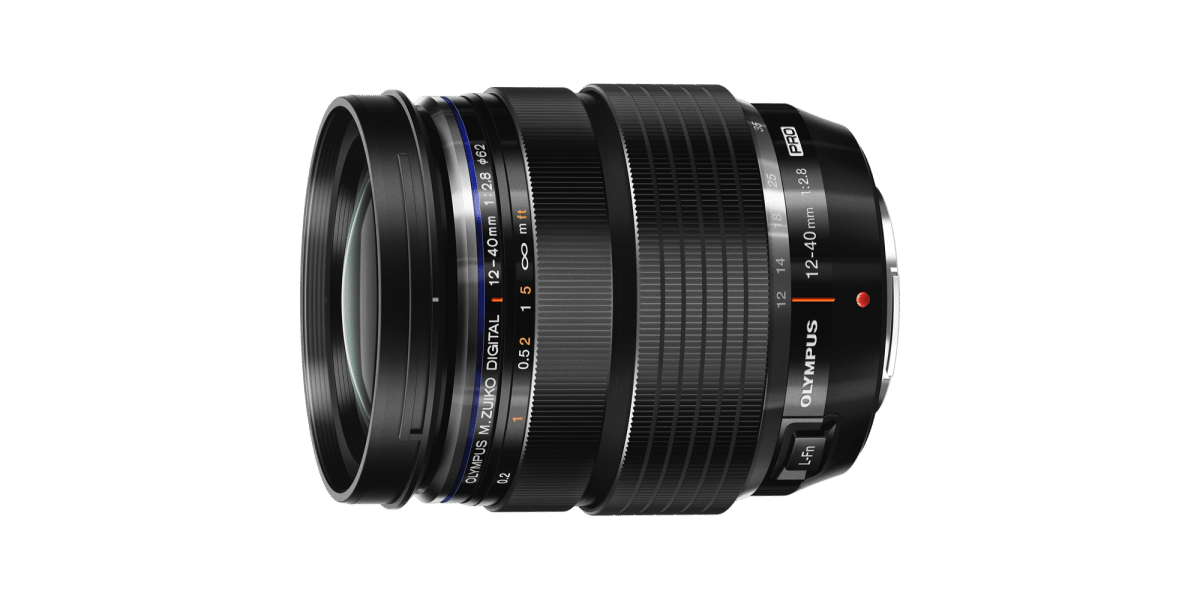
Buy OM SYSTEM M.Zuiko ED 12-40mm F2.8 PRO II Now
The kit lens on most Olympus cameras is the Olympus M.Zuiko 14-42mm F3.5-5.6. On Panasonic, your kit lens is Panasonic 12-32mm f/3.5-5.6.
You’ve probably noticed this lens has a similar range to those kit lenses, but the f/2.8 means it’s a lot faster and that max aperture stays the same across the range.
Photographers LOVE this lens, in fact it’s one that regularly stays on camera day in day out.
If you are shooting Panasonic, you might be better off getting Panasonic’s version which I’ll describe below, to best take advantage of the stabilization.
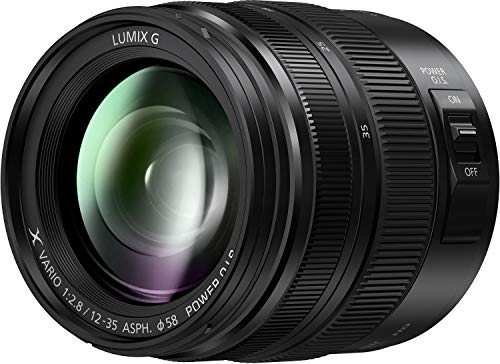
2. Panasonic Lumix G Vario 12-35mm f/2.8
This walkaround lens has just a few mm greater range than the kit lens on Panasonic, but again the f/2.8 will provide much better low light performance. Same deal, it’s about $1000 when not on sale.
Buy Panasonic Lumix G Vario 12-35mm Now
If you’re into waiting for the blue hour to get that rich color, you might find that this lens suits your shooting style more than the kit. Paired with the IS, you might be able to get away without a tripod too.
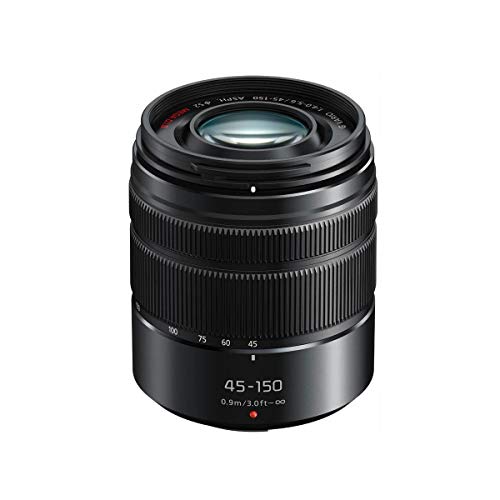
3. Panasonic Lumix G Vario 45-150mm f/4-5.6
This and the next lens are good budget telephoto zoom lenses so they have a reach greater than 100mm.
Remember, the MFT format doubles the effective focal length, so 45-150mm equates to 90-300mm on a full frame
The walkarounds above are the best micro four thirds zoom lenses for landscape photography as well as portrait views. So you can decently cover the paddy fields of Vietnam or shoot a local market. But If you’re into bird or wildlife shots, more reach is necessary. And that’s where a telephoto comes in.
Buy Panasonic Lumix G Vario 45-150mm Now
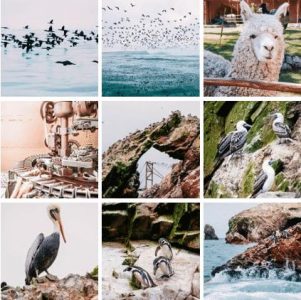
For e.g. these shots of endangered Humboldt penguins at Ballestas Islands, Peru would not have been possible without a range of 300mm.

This Panny is a great budget pick for increasing your range to 300mm. It’s quite sharp, has image stabilization, and the cost makes it really excellent bang for your buck. Another win is that it’s quite compact at 200g.
4. OM SYSTEM M.Zuiko Digital ED 40-150mm F4.0 PRO
If you want a more serious telephoto option without jumping all the way to a huge pro lens, the OM SYSTEM 40-150mm F4 PRO is a very compelling upgrade. It gives you the same useful 80-300mm equivalent range as the older budget zoom, but in a weather-sealed constant-f/4 design that feels much more like a premium travel telephoto.
It is still compact for what it is at about 382g, and that matters because long lenses are the ones you are most tempted to leave behind if they get bulky. If you like wildlife, compressed landscapes, or pulling details out of distant scenes, this is a much nicer lens to build a travel kit around.

Buy OM SYSTEM 40-150mm F4 PRO Now
The secret here is that the older Olympus 40-150mm f/4.0-5.6 is still very easy to find on eBay for around $150. So if the F4 PRO price feels too high, there is still a very affordable way to get this focal range.
One reason this lens makes more sense for travel now is that my current camera pick, the OM SYSTEM Olympus E-M10 Mark IV, already has in-body stabilization.
READ MORE: Why the OM SYSTEM Olympus E-M10 Mark IV is my current pick for the best travel camera
So if you are shooting with something like the E-M10 Mark IV, you already have in-body stabilization covered. If your camera does not have it, the older Olympus 40-150mm f/4.0-5.6 or the Panasonic 45-150mm still give you budget-friendly alternatives.
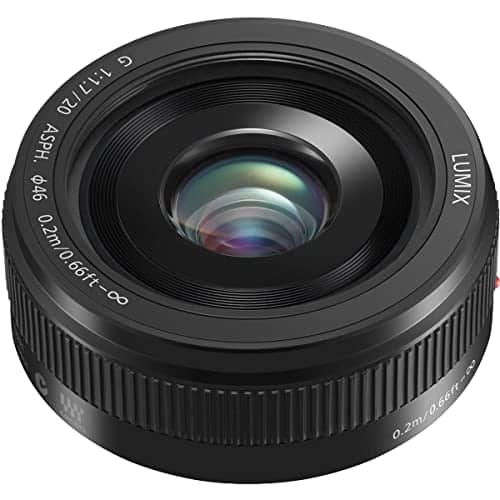
5. Panasonic Lumix G 20mm f/1.7
This low-light lens is great for those evenings where you head out for the night and hope you end up at an epic beach bonfire or an impromptu fiddle performance in the smoker’s huddle outside the bar.
It will capture low light images with loads of bokeh with that extremely wide f/1.7 aperture. And that gives you some great atmospheric shots.
Buy the Panasonic Lumix G 20mm f/1.7
See how tiny it is? It’s a pancake lens which is great for not being intrusive and still getting great shots.
6. OM SYSTEM M.Zuiko Digital 9-18mm F4.0-5.6 II
Ultra-wide is still hard to come by in Micro Four Thirds, and this updated 9-18mm is one of the most travel-friendly ways to get it without carrying a much bigger lens.
If you want dramatic landscapes, tight streets, and interiors that actually feel expansive, the OM SYSTEM 9-18mm F4.0-5.6 II gives you that perspective in a small, easy-to-pack zoom. It is still an optional lens for most trips, but it is a very compelling ultrawide if portability matters.

Buy OM SYSTEM M.Zuiko 9-18mm II
This is still the reasonably priced autofocus ultrawide zoom I would look at first if I wanted a small Micro Four Thirds travel kit.
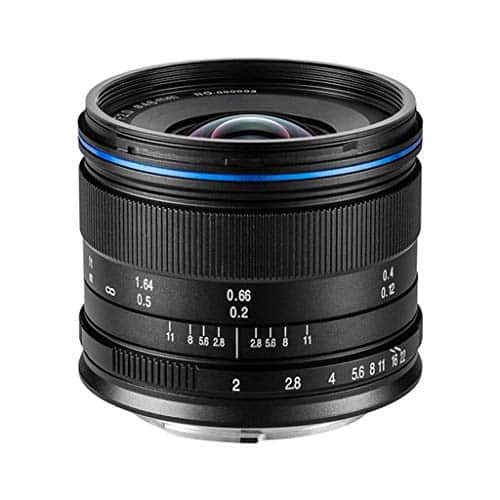
7. Venus Laowa 7.5mm f/2 Lens
Okay, this lens is definitely an advanced maneuver so let me tell you a bit about it before you go for it.
It’s 7.5mm which is 15mm effectively and one of the widest lenses you can get on m43 that isn’t fisheye. I find fisheyes to be a little too gimmicky.
It’s a rectilinear lens which means your lines should be straight just like a regular shot.
But it’s manual focus, manual aperture only! And a relatively unknown brand.
Buy Venus Laowa 7.5mm f/2 Lens
One thing to know – with an ultrawide angle like this one, it’s actually pretty easy to focus because you’re not going to get too narrow depth of field, despite the f/2.
But fair warning if you really don’t think you’d like to manual focus.
The shots I’ve seen from this lens are just beautiful and I’m definitely buying it the moment I get back to the States.
Panasonic Lumix G Vario 14-140mm f/3.5-5.6
This one is a superzoom or all-in-one zoom. It has a massive range equivalent to 28mm to 300mm which means you can shoot landscapes and wildlife with this one.
To be honest, many photogs don’t love these because they tend to be a bit softer and slower. However, I am lazy! I really don’t want to change lenses during a day trip. Travel is a very variable environment, unlike a portrait or product shoot, and I don’t like to be swapping all day. So this is the main lens I keep on my camera when I travel!
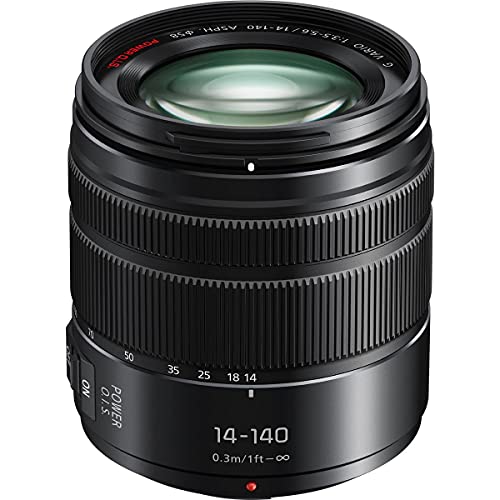
Buy Panasonic Lumix G Vario 14-140mm f/3.5-5.6 Now
These lenses are also great for those switching from a point-and-shoot or cellphone who want the quality of the larger sensor and better optical zoom, but do not want to carry more than one lens ever. With image stabilization built into the lens, you can pop this onto any camera and head out, skipping the tripod in most cases.
It’s even fairly compact at 265g which is a marvel. I actually originally used a Tamron with roughly these specs, but eventually got this one and I love it.
Summary of the Best Micro Four Thirds Lenses
Alright people, there you have it. Those are some great lenses that should have you shooting all day and coming back with a ton of great images to process. Only question now is which ones do you get?
First let me summarize all of them with their weights and then go into how to put together a solution based on your shooting style.
| Type of Lens | Lens | Cost | Weight |
|---|---|---|---|
| Upgrade Oly Zoom | OM SYSTEM M.Zuiko ED 12-40mm F2.8 PRO II | $$$ | 382g |
| Upgrade Panny Zoom | Panasonic Lumix G Vario 12-35mm f/2.8 | $$$ | 306g |
| Panny Telephoto | Panasonic Lumix G Vario 45-150mm f/4-5.6 | $ | 200g |
| Oly Telephoto | OM SYSTEM M.Zuiko Digital ED 40-150mm F4.0 PRO | $$$ | 382g |
| The Lowlight Prime | Panasonic Lumix G 20mm f/1.7 | $ | 100g |
| The Ultrawide | OM SYSTEM M.Zuiko Digital 9-18mm F4.0-5.6 II | $$ | 154g |
| The Manual Ultrawide | Venus Laowa 7.5mm f/2 | $$ | 170g |
| The Panny Superzoom | Panasonic Lumix G Vario 14-140mm f/3.5-5.6 | $$ | 265g |
How Many Lenses Should You Carry
Often times new owners of interchangeable lens cameras don’t think about how many lenses they actually want to carry. They buy new lenses for all sorts of exciting specialty needs but soon realize they don’t take them out very often.
To avoid falling into this trap, think carefully about what you like to shoot and pick a solution that works for you. Below are 3 solutions you could consider.
One Lens Solution
If you’re going to go with one lens, then either an upgraded kit, or an all-in-one zoom is the way to go. The advantage of one lens is that you don’t have to change lenses on the go, but one lens can’t be all things so you will sacrifice something, speed or sharpness or range.
Two lens Solution
2 lenses gives you more opportunity to augment your equipment to suit your style. Take a walkaround lens and add on a second lens that is especially suited to the kind of shooting you prefer. But you do have to look at the weight of the combinations.
The weights in this table don’t include the weight of the body, so keep that in mind, and add that in to get a weight for your setup.
| Shooting Style | Lenses | Weight in g |
|---|---|---|
| Wildlife shooter | The kit and a telephoto | 270g |
| Landscape shooter | A superzoom and ultrawide | 420g |
| Budget Travel shooter + low-light | A superzoom and fast prime | 365g |
| Upgrade Travel shooter + low-light | An upgraded kit and fast prime | 405g |
These are just some examples of how to create a kit that works for you.
Conclusion
So there you have it, these are some of the best micro four thirds lenses for travel on a hobbyist budget. I hope you got some good insight on how to put together a setup that is minimal but works for you. Just remember, as long as you get out there and get the shots you enjoy, that’s more important than any spec.
Here’s a quick link back to the table of lenses >> Best m43 lenses for travel.
Thanks for reading!
This post has affiliate links. As an Amazon Associate I earn from qualifying purchases. The opinions presented are my own.