People often ask me which camera to buy, so I figured, why not consolidate the features I consider must-haves and what I believe to be the best camera for travel into one post, and keep it updated as time goes on. I will cover the best mirrorless camera for travel, as well as the best compact camera for travel.
UPDATE: I first wrote this article in 2018. I checked it again in 2026 and updated my main recommendation. Right now, the OM SYSTEM Olympus E-M10 Mark IV is the camera that best fits the travel-friendly criteria I lay out below.
A good travel camera should be versatile enough to handle a variety of situations while being easy to carry about. Depending on your style of travel, this could change but a lot of factors stay the same. Given the list of features I think are really valuable while traveling, what’s the best camera out there?
If you’re the impatient type – go straight to the recommended camera!
Take me to the Best Camera for Travel Right Now
Or read on to learn more about how to pick the right travel camera for you.
Why Make the Switch?
So when my friends ask me for a rec, and are currently rocking their smartphone, my first question to them is always “But why? Why do you want to switch?”
The reason I ask this is because if they’ve gotten used to their pocketable smartphones, it really is important to have a good reason to carry a bigger camera. Or guess what, they’ll buy the camera, unbox it and then never carry it with them.
Smartphone cameras have gotten pretty amazing over the last half decade. And the interesting thing is, it’s the software on them that enables some amazing features that are better than most cameras. Excellent in-camera HDR and panoramas, seamless GPS tagging, the ability to post to social.
Smartphone cameras use incredible software to deliver amazing results
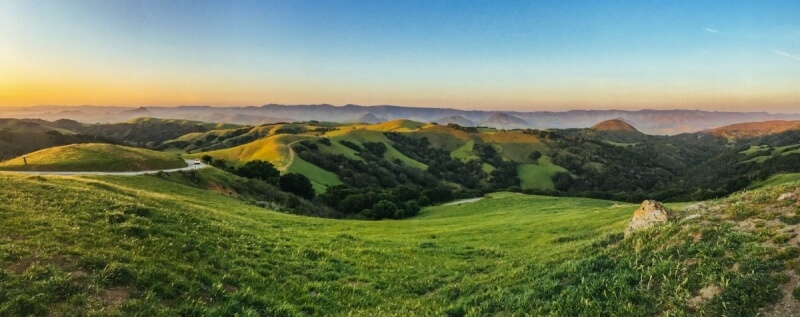
Here’s a panorama I took with my husband’s iPhone. I actually had my Canon 70d DSLR on me at the time, but panoramas are SO much easier on the iPhone.
A well-worn, but accurate, cliché is that the best camera to use, is the one you have on you. And these days, that’s most likely to be your smartphone than anything else.
But I get it – if you’ve come here searching for the best travel camera, chances are you’ve already decided to make the switch.
Okay, You’re Itching For An Upgrade
My second question is usually, “What are you planning to shoot?”
For many people it’s their new baby (congrats!), or their daughter’s soccer game, or family events. But since this is a travel photography site, I’m going to focus this article on the best travel camera.
What’s Special about a Travel Camera?
Some features are obviously important in pretty much any camera you choose, but the tradeoffs play out a little differently when you are traveling, when portability and versatility start to matter a whole lot.
There really isn’t the perfect camera for all situations, but there is one that will handle most of your needs more than capably. Capture a great landscape, but also zoom in when you need to.

In addition to the type of photography, it also kind of matters what sort of user you are. If I buy my non-techie dad a camera, I’ll probably get him something a LOT simpler than I’d get for a friend I know is more comfortable with gadgets.
I’m an advanced amateur. I don’t shoot for a living but I know how to use the both the manual and spiffier settings on my camera, I like to shoot raw and process the photos in Lightroom, and I’ve had a few paid gigs and print sales. So my recommendations are going to be in line with that and hopefully you can adapt my suggestions for yourself.
How to Choose a Camera for Travel
To start with, which features matter for a travel camera, and what are the tradeoffs? I’m just going to define these here. Then I’m going to walk you through how my choice vets out against them. The best cameras for travel should fare pretty well on each of these features.
Sensor size
This is a biggie. Essentially, the larger the sensor, the better image quality you are gonna get. Yup, size matters The sensor is the “film” in your digital camera.
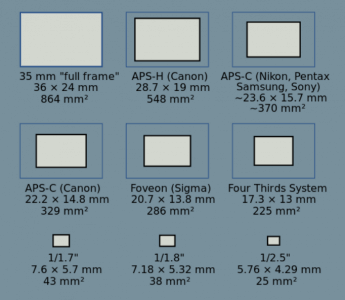
Tradeoff – The larger the sensor, the pricier the camera, the larger the lenses you need.
You can see a sensor size comparison in the image. Full frame is the kind of camera most full-on professional photographers use.
APS-C sensors are usually found in many consumer DSLR or larger mirrorless cameras.
Then you have Four Thirds, which you can see is smaller than APS-C but still in the same range.
Finally at the bottom you see point and shoot sized sensors. The latest iPhone sensors are about 18mm², so smaller than all of the sensors pictured.
Lens
After the sensor, the lens is probably the next most important feature that affects your photos directly. But a lot of tradeoffs come into play here, especially when it comes to the size and weight of the lens.
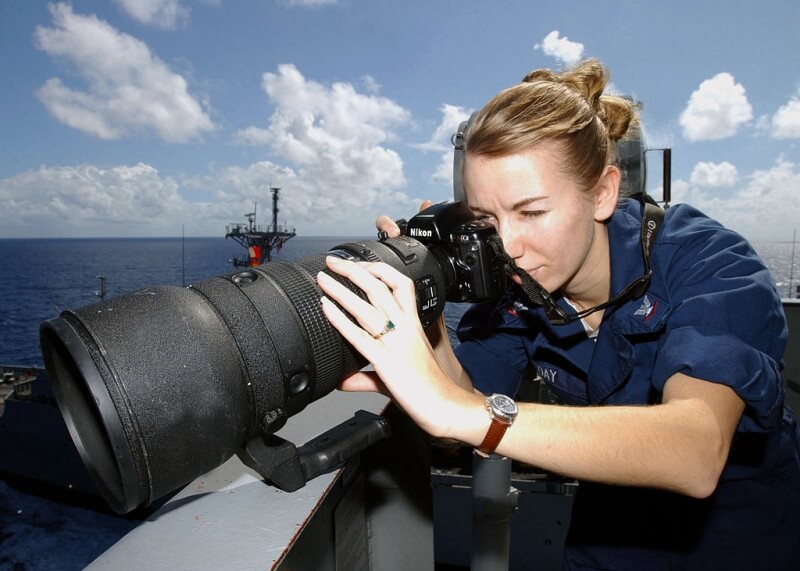
The key thing to note, is that the lens is pure physics, it bends light to hit the sensor. Fact is, on average, the larger the sensor, the larger the lenses you need. So even though the best sensors are the biggest sensors, you have to take into consideration the size of lenses needed as well.
Tradeoff – Size and weight of the lens trades off against zoom and speed (or widest aperture of the lens).
Hard to travel with this, isn’t it?
Interchangeable lenses
Since a lot of the tradeoffs happen with the lens, being able to swap lenses is game-changing. For any particular day, you can pick the right lens for the job.
Tradeoff – The more lenses you carry, the more options you have but the more overall weight you end up with.
ILCs or Interchangeable Lens Cameras let you pick the right lens for the job
Image Stabilization
As you travel it’s often not convenient to have a tripod. Good IS can get you a lot of shots you might miss without it. It’s not the answer to everything – it won’t help with moving subjects – but it can give you amazing low-light landscape or skyline shots.
Tradeoff – Not much other than the fact that newer (and therefore pricier) cameras tend to have better IS.
Here’s a handheld shot of the Boston skyline.

Size and weight
While this may not matter for people shooting in a studio, this is a big one for travel. You want something that’s easy to pack and travel with. A more discrete setup is also better for security and street shooting.
I know way too many people that go in for a dSLR and then never take it out because it’s too big and heavy. So it sits in a closet instead.
Tradeoff – The smaller you go, the smaller the sensor you get, and the fewer the features. Useful components like a viewfinder or tilting screen get dropped. Sometimes even settings get harder to access.
Manual settings
This is the ability to have a lot of control over your photos using partial or full manual settings.
Even if you don’t start off using anything other than auto, eventually you will want to at least use Aperture mode, and your camera should allow you to do so.
Tradeoff – Mostly size – cameras with manual settings must provide accessible wheels to access them which require a slightly larger form factor. The smallest cameras will bury the settings in menus, making them as good as useless.
I like my cameras to have full manual settings and all the modes I’d expect on my DSLR.
Wireless capability
On the road, it’s really handy to quickly transfer a photo to your phone and upload it. Especially while traveling. So either wifi or bluetooth connectivity can be really important.
Tradeoff – Not much other than that newer (and therefore pricier) cameras will have better connectivity.
Cost
While I’m sure cost is no object for some people, for most of us cost plays a big part in the decision. Especially with a travel camera, there is a chance it gets lost, damaged or stolen and for that reason I prefer a mid-range camera as opposed to the highest end I can afford.
Tradeoff – Well this one is upto you. Perhaps you take one less tour because you spent all your fun money on gear? Or you don’t want to take your camera out because it might get damaged or stolen? You do you.
Bonus Features
What are bonus features? Well, they are the nice-to-haves. Or maybe to some people, one of these might be a real priority. I mention these here in case you might want to consider them.
Video – Most but not all cameras now have some video capability, some with 1080p and some with 4K. 4K is probably not a necessity right now if you are primarily a photographer. But image stabilization of the video makes a huge difference so that’s something to watch out for.
In-camera HDR or Panorama – HDR and Panoramas are features in every smartphone now. But not in every camera. If you make a lot of these, it would be pretty sweet to have them in-camera.
In-camera features make processing more painless. More time behind the camera, less time in front of a computer.
Water and Weatherproofing – Naturally, everyone would love to have a camera you could just drop in a pool and not worry about it! But again tradeoffs – you’re not going to get a waterproof camera without sacrificing some other factors. But if you’re a surfer or diver, obviously this could be a very important feature for you.
Portability – This is hard to quantify but a simple thing like being able to charge your camera using a standard micro-USB cable can make a huge difference. You can charge it off one of those external batteries you carry for your phone. Or pretty much any hotel will have one of these in their lost and found.
The Best Camera For Travel in 2026: OM SYSTEM Olympus E-M10 Mark IV Silver
My recommendation for the best camera for travel right now is the OM SYSTEM Olympus E-M10 Mark IV Silver.
It still hits the same sweet spot I care about most for travel: interchangeable lenses, strong in-body stabilization, a genuinely compact body, and enough manual control that you won’t outgrow it the minute you learn what aperture priority does.
If you want one camera that can handle city wandering, landscapes, street shooting, low light interiors, and the occasional quick clip of video without feeling like a burden, this is a really compelling setup.

Buy OM-D E-M10 Mark IV Silver Now
Sensor Size is Still the Sweet Spot
The E-M10 Mark IV uses a 20.3 megapixel Micro Four Thirds sensor. That’s still my favorite middle ground for travel because the image quality is strong, the lenses stay reasonably small, and the whole system doesn’t balloon into something you resent carrying by day three of a trip.
No, it’s not full frame. But travel is all about tradeoffs, and Micro Four Thirds continues to be one of the most sensible ones. Big enough to make beautiful images. Small enough to actually bring with you.
Interchangeable Lenses are the Real Win
This is still the killer feature for me. A travel camera gets dramatically more useful the minute you can match the lens to the day.
Want a light everyday walkaround setup? Use a small zoom. Want reach for details, wildlife, or compressed city scenes? Bring a longer lens. Want low-light flexibility? Add a fast prime. That flexibility is exactly why I still prefer a camera like this over a fixed-lens compact.
The E-M10 Mark IV uses the Micro Four Thirds mount, which means there are loads of small, proven travel-friendly lenses available for it.
Keep Things Portable
This is where the OM really makes its case. Officially, the body weighs about 335g, or about 383g with battery and card, and the body dimensions are 121.7 x 84.6 x 49 mm. That’s properly small for a camera with an electronic viewfinder, in-body stabilization, and interchangeable lenses.
In other words, it stays on the right side of the line between “nice camera” and “ugh, I don’t feel like carrying that today.” That matters more than people think.
The flip-down touchscreen also makes it easier to shoot from awkward angles, waist level, and overhead without turning every interesting composition into a yoga move.
Image Stabilization
The E-M10 Mark IV has 5-axis in-body image stabilization rated up to 4.5 stops. That’s a huge deal for travel.
It helps in exactly the kinds of situations travelers end up in all the time: blue hour streets, dim churches, indoor markets, museums, and late evenings when you don’t want to drag out a tripod or simply can’t.
Good stabilization doesn’t freeze moving people, of course, but it absolutely helps you come home with more handheld shots you actually want to keep.
Full Control Without the Fuss
This is not one of those cameras that feels good until you actually want to do something deliberate with it. You still get the manual control that matters: P/A/S/M modes, proper exposure control, RAW capture, an electronic viewfinder, and enough direct handling to make the camera feel like a camera, not a gadget pretending to be one.
The autofocus system uses 121 contrast-detect points, which is perfectly solid for travel, street, and general use. I would not call it my first pick for serious sports or erratic wildlife, but that’s not what this article is really optimizing for.
Post on the Road
The wireless story is better here than on a lot of older travel camera favorites. The E-M10 Mark IV has both Wi-Fi and Bluetooth, and OM says you can transfer images to your phone and pull GPS data from your smartphone as well.
It also supports USB charging in-camera, which I still think is one of the most traveler-friendly features a camera can have. Fewer proprietary charging headaches on the road is always a win.
The one slight bummer is that it still uses Micro-USB instead of USB-C. That’s not a deal-breaker, but it is one more cable to think about.
Other Nice Extras
You also get 4K video, a built-in flash, and some genuinely useful creative modes if you like to experiment. None of these are the reason I would buy the camera, but they do round it out nicely.
Improvements and Caveats
I don’t want to pretend this camera is magic, because nothing is.
First, it is not weather sealed, so if you regularly shoot in heavy rain, blowing dust, or rough conditions, that’s a real limitation.
Second, battery life is fine rather than amazing. OM rates it around 360 shots, which is workable for travel, but I would still carry a spare battery.
Third, if your favorite kind of travel photography is fast action, this camera is more “capable” than “special.” For landscapes, streets, architecture, food, portraits, and everyday travel use, though, it makes a lot more sense.
Cost
Okay, now the important part.
As of March 19, 2026, OM SYSTEM lists the silver body at $649.99 in the US store. That’s a very reasonable price for a camera with in-body stabilization, a 20.3MP sensor, an EVF, wireless connectivity, and access to the Micro Four Thirds lens ecosystem.
It is not the absolute cheapest way to take photos on a trip. But it is one of the more sensible ways to buy a camera you can actually grow with.
A Better Fit for Travel Right Now
So there you have it. If I were updating this recommendation today and picking one interchangeable-lens travel camera for most people, I’d point them to the OM SYSTEM Olympus E-M10 Mark IV.
It is small, capable, stabilized, flexible, and much easier to live with on the road than a bigger system. That combination matters more than spec-sheet bragging rights.
Most importantly, it still feels like a camera you will actually take with you. And that, more than anything, is what makes a camera a great travel camera.